
The difference that matters
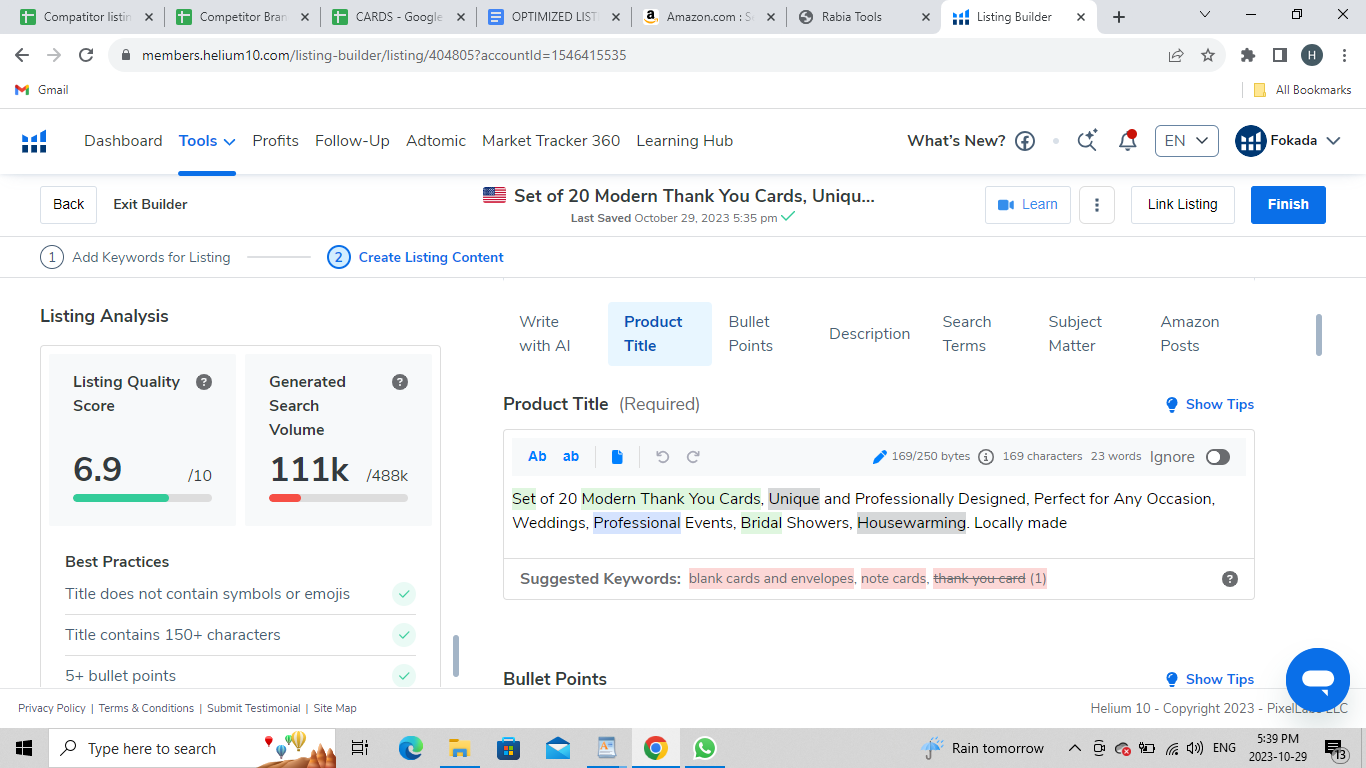
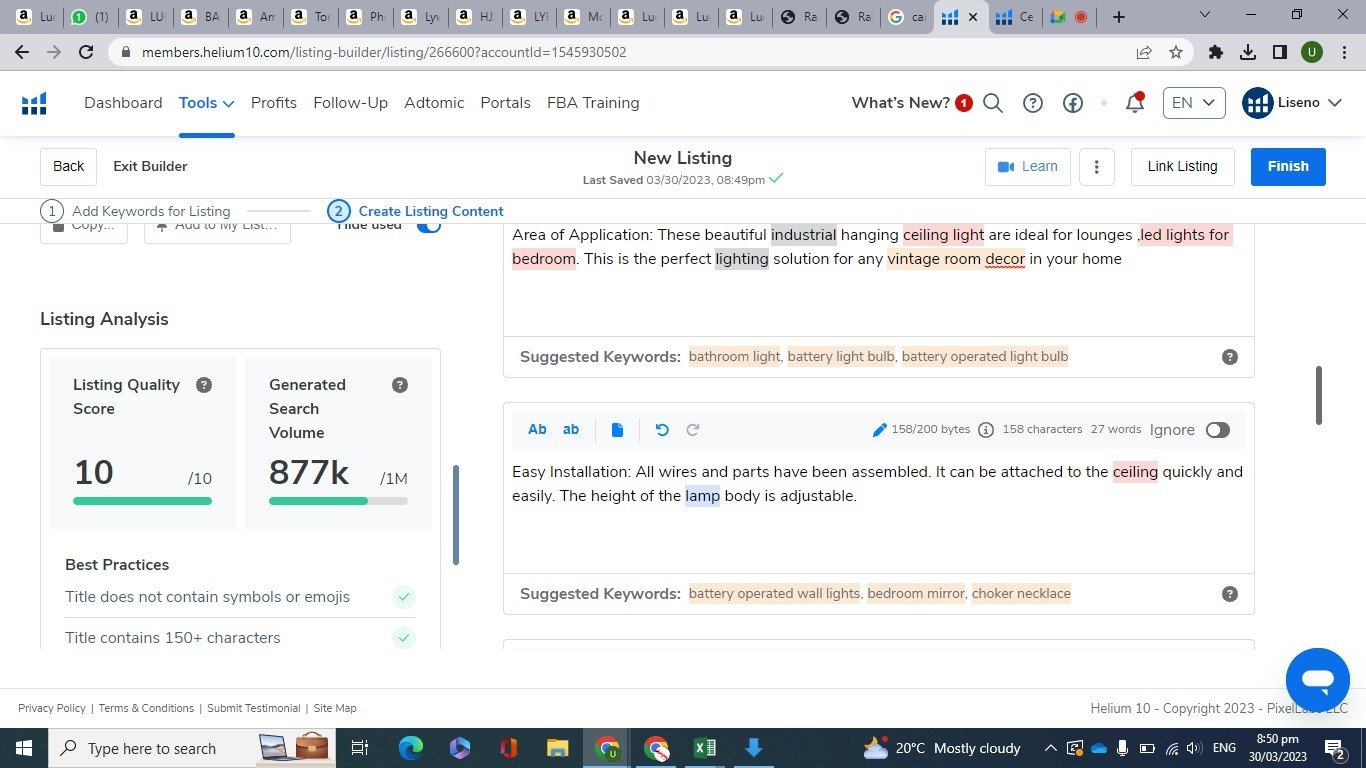
The first screenshot shows a 6.9/10 Listing Quality Score on a thank-you cards product. The second shows 10/10 on a ceiling light. The owner identified them as examples from one account, but the products and visible timestamps differ. A score comparison across them is not a controlled before-and-after result for one ASIN.
A repeatable quality discipline
A catalog needs product-specific titles, bullets and descriptions that answer buyer questions clearly. These examples show how a listing workflow can be assessed across products. The Helium 10 score is a third-party content indicator; it is not an Amazon ranking metric, and neither image includes sales or conversion data.
The source screenshots
Policy is the baseline
Amazon’s title rules introduced in January 2025 limit most category titles to 200 characters and restrict repeated words and certain special characters. Its listing guidance stresses accurate product details and images. Those are meaningful checks for any content workflow; a sales-lift claim would require same-ASIN performance data that was not supplied.
Reading this result responsibly
The screenshots are from different products and show different on-screen dates. They are presented as two account examples, not as a measured same-product transformation.
Amazon’s official documentation gives context for the metrics and platform rules. It does not establish the cause of this account’s result.